


Face milling
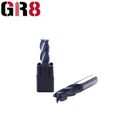
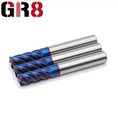
When it comes to face milling, end mills can certainly be used, but it's important to be aware of their limitations. Due to the fact that the main declination angle of an end mill is 90°, the tool is subjected to radial force which can result in deflection and deformations in the tool bar, and even cause vibrations that can impact processing efficiency. It's worth noting that end mills are not typically recommended for flat surface machining without steps, unless you're dealing with a thin bottom workpiece or there's a specific need for smaller axial forces. In short, while end mills can certainly be useful tools for certain applications, their limitations must be taken into account when planning your machining operations.
Sidewall face milling
When using end mills for machining, it is common for workpieces to have one or more perpendicular sidewall faces aligned with the bottom surface. This can pose a challenge that is not encountered in face milling, as it can lead to issues with the shape and accuracy of the sidewalls. To address these concerns, careful attention must be given to the milling machine spindle's parallel alignment with the bottom surface. By ensuring this alignment, the problems associated with sidewall shape and accuracy can be effectively mitigated.
